
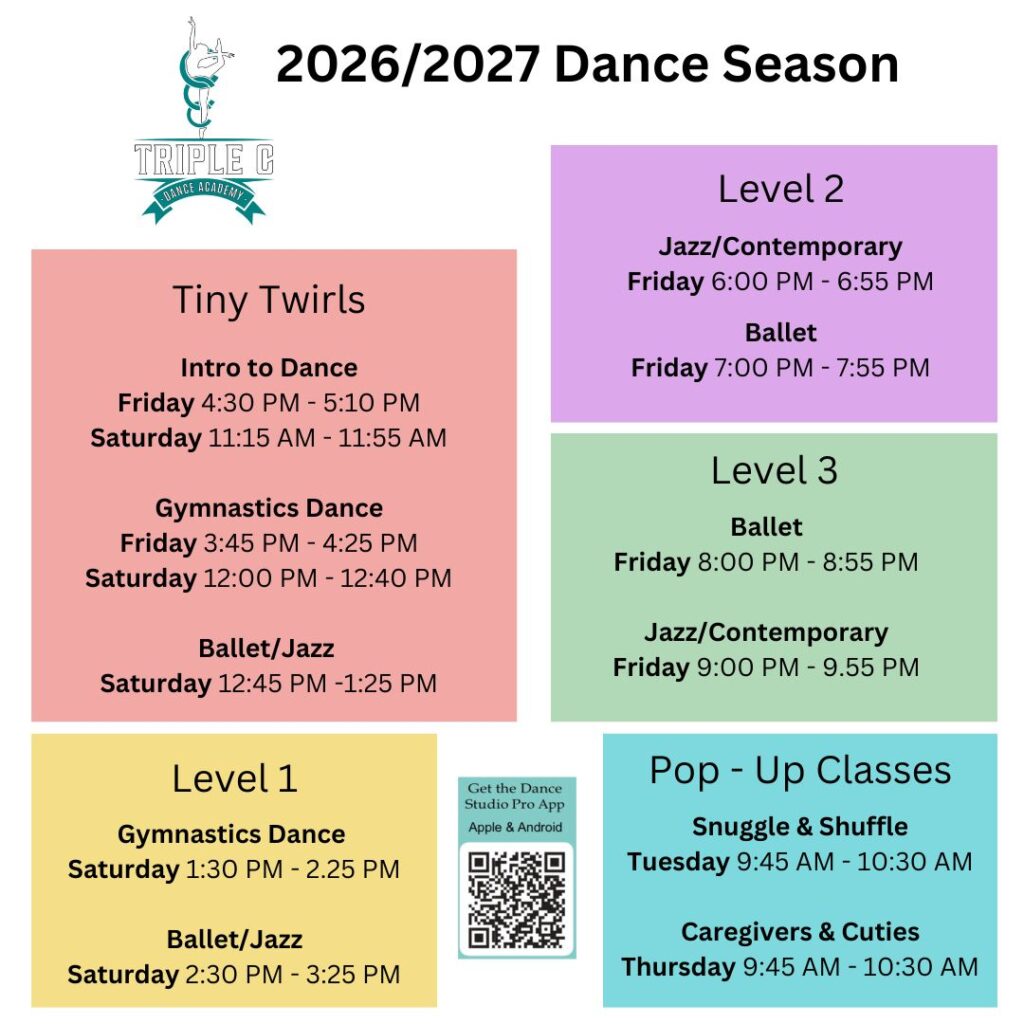
2026/2027 Dance Season
Tiny Twirls
Pop - Up Classes
Level 1
Level 2
Level 3
WHAT TO WEAR?
Frequently Asked Questions
When does the season start and end?
Fall: August – November (Show in December)
Spring: January – April (Show in May)
Do I pay by class or monthly?
Tuition is due monthly by the 25th of the month prior to class.
How long is each class?
All classes at the main studio are 40 minutes long.
All classes at creative world are 30 minutes long.
Where are the recitals held?
Spring Recital
Lehigh Senior High School
901 Gunnery Rd N, Lehigh Acres, FL 33971
Fall Recital
Agape Christian Fellowship.
8270 Buckingham Rd, Fort Myers, FL 33905
What is your refund/withdrawal policy?
We require a written 30-day notice to stop enrollment and billing. Withdrawals made without a 30-day notice will still be charged the next month’s tuition. If your 30 days end mid- month, we will prorate your tution. No refunds will be given.
What if a class is missed?
Tuition holds your dancer’s spot in class and is billed as a flat monthly rate. Tuition is not prorated for absences.
Do I have to sign up for autopay?
Yes, we require a card to be placed on file. For your convenience, we will charge the card on file on the 25th of the month, although you are welcome to pay in cash at the studio or manually on the app using any card you’d like before the 25th of the month.
What is the best way to contact you?
Email is the best way to get a hold of us: Info@triplecdance.com
You may also chat with us in the parent portal app
Tuition covers so much more than dance technique!
Dance is a multifaceted activity that can support your child’s physical health, mental sharpness, emotional resilience, and social skills.
Encouraging your child to participate in dance can have long-lasting positive effects on their overall well-being and development.
Here are just some of the ways dance can support your child’s development:
Physical Well-Being
Dance routines improve fine and gross motor skills, contributing to overall physical development. Dance also promotes good posture and body alignment, which can prevent future musculoskeletal issues.
Cognitive Development
Learning dance routines and memorizing steps enhance cognitive abilities, including memory, attention, and problem-solving skills.
Discipline and Focus
Dance classes require concentration and self- discipline, which can translate to better focus in academic and other activities.
Self-Esteem and Confidence
Performing in front of others and mastering new skills boosts self-confidence and self-esteem.
Emotional Well-Being
Physical activity, including dance, helps reduce stress and anxiety, promoting emotional well-being. Dance provides an outlet for expressing emotions, helping children understand and manage their feelings.
Teamwork and Cooperation
Dance frequently involves group work, teaching children the importance of teamwork, cooperation, respect, and communication.
Friendships
Dance classes provide a social environment where children can make new friends and develop social skills.
Time Management
Balancing dance practice with school and other activities teaches valuable time management skills.
Goal Setting
Working towards performances or mastering routines helps children set and achieve goals, fostering a sense of accomplishment.
Resilience
Dance teaches perseverance and resilience as children learn to overcome challenges and setbacks.